Free tool
Is your HRV good for your age?
Heart-rate variability (HRV) naturally declines as we age, so a number that looks “low” online might be perfectly healthy for you. Enter your age and your average HRV to see where you actually land.
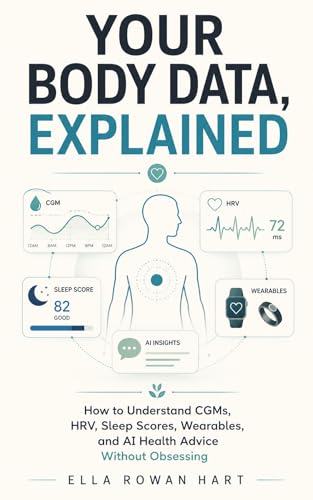
Want the whole picture?
This tool covers one number. Your Body Data, Explained walks you calmly through HRV, sleep scores, recovery, CGMs, and AI health advice — so you can feel informed instead of anxious.
View on AmazonCommon questions about HRV
What is a good HRV for my age?
HRV (measured as RMSSD) tends to fall as we get older. As a rough educational guide, typical ranges look like this:
| Age | Typical HRV (RMSSD) |
|---|---|
| Under 25 | 45–105 ms |
| 25–34 | 38–90 ms |
| 35–44 | 30–72 ms |
| 45–54 | 26–62 ms |
| 55–64 | 22–52 ms |
| 65 and over | 18–45 ms |
These are broad ranges, not medical cut-offs. Your own trend matters far more than any single reading.
Why is my HRV low?
A single low reading usually reflects poor or short sleep, alcohol, stress, illness, dehydration, or a hard workout the day before. One low morning is normal. A steady downward drift over weeks is the more meaningful signal — and it usually points back to sleep, alcohol, or recovery.
Can I improve my HRV?
Often, gradually. The biggest levers are consistent sleep, limiting alcohol, managing stress, gentle aerobic exercise, and staying hydrated. Progress shows up as a rising baseline over weeks — not a bigger number tomorrow.